
Sex Offender Checks in Tarrant County
The Texas Department of Public Safety maintains the Texas Public Sex Offender Registry. It is the broadest official channel for a Tarrant County sex offender search because it aggregates public listings from local registration authorities across Texas. Search by a precise address and radius, then repeat the search by city, ZIP code, county, and name. Boundary or geocoding issues can affect a map result, while spelling and aliases can affect a name result.
The Texas DPS registry search is the starting point for statewide coverage.
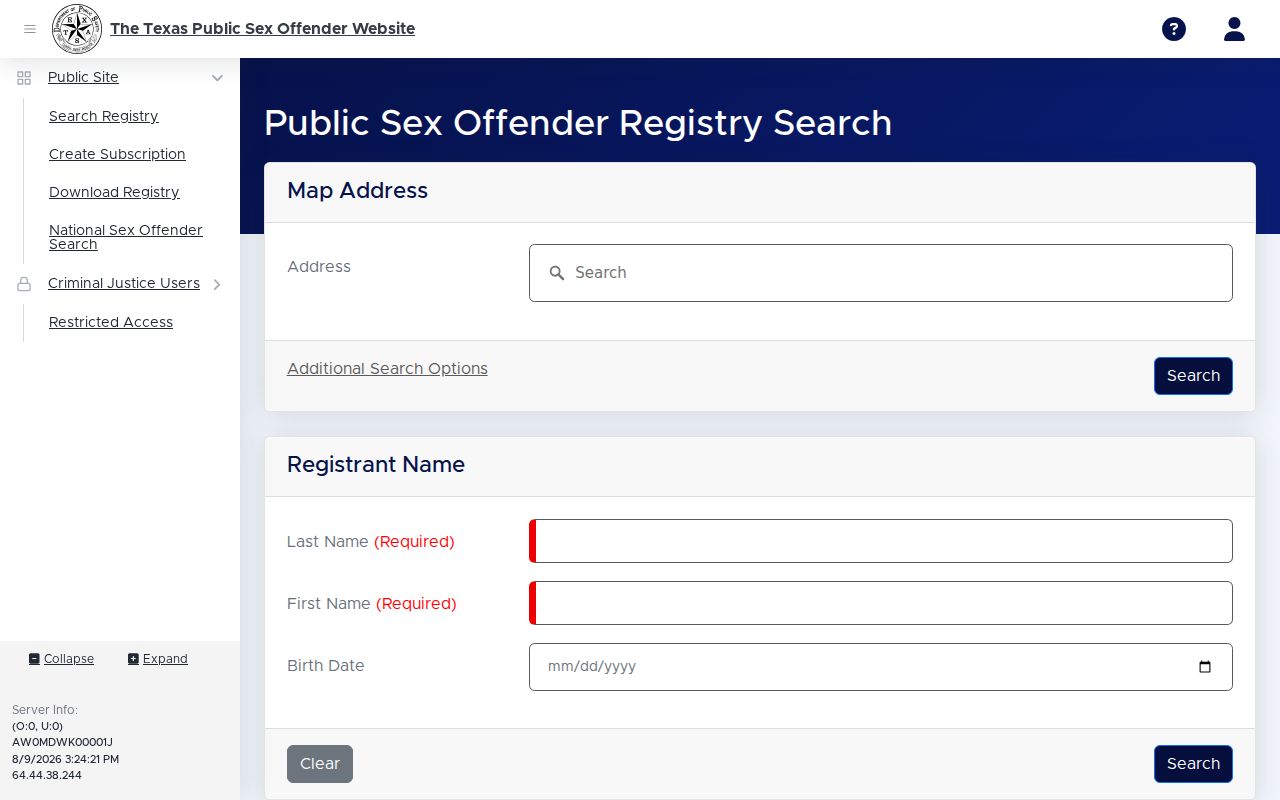
The interface supports both person and place-based checks. Open the full profile, compare its written address to the map point, and note the verifying agency before acting on the result.
Tarrant County Sex Offender Authorities
The Tarrant County Sheriff's Office Registration and Compliance Unit covers unincorporated Tarrant County plus River Oaks, Benbrook, Edgecliff Village, and Haslet. It is located at 200 Taylor Street, seventh floor, Fort Worth, and lists 817-884-3354. Fort Worth and Arlington residents register with their city authorities instead. Other municipalities may also have a local authority, so a city address should not be routed to the sheriff by default.
The TCSO Registration and Compliance Unit page states its exact local scope.
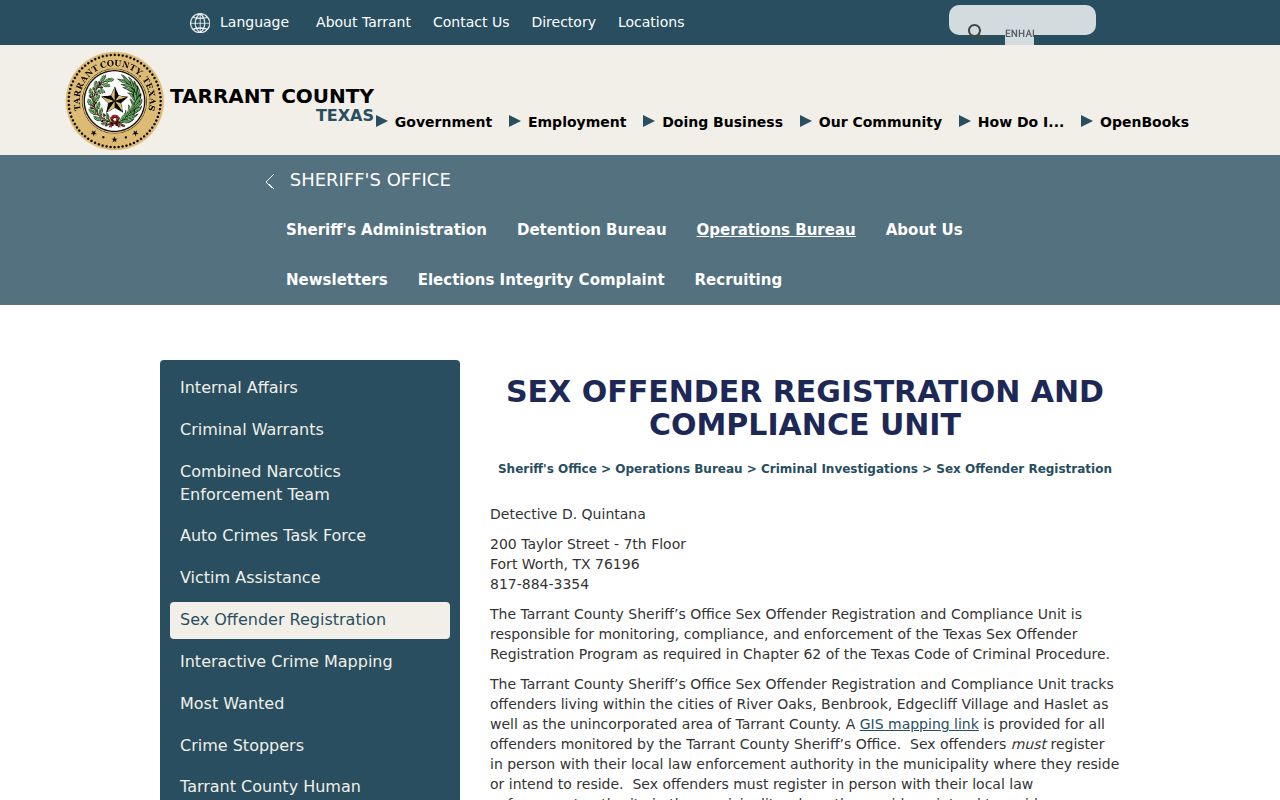
This patchwork is why the DPS registry is safer for a countywide search. The local unit remains the right contact for verification or suspected noncompliance inside its listed jurisdiction.
A verifying agency can confirm whether its public data reflects the latest in-person report. It can also receive a factual tip about a possible address or compliance issue. The agency listed on a DPS profile is more useful than assuming every Tarrant County address falls under TCSO. City boundaries, unincorporated pockets, and the sheriff's named partner communities make that distinction practical.
Note: Registration takes place in person with the law-enforcement authority for the place where the person resides or plans to reside.
How to Search the Texas Public Sex Offender Registry
DPS offers several ways to search public registry records. Use identifying data carefully and avoid relying on a map alone. A result can reflect spelling, address status, or geocoding details that need confirmation with the profile and verifying agency.
- Open the DPS registry and review the conditions and warnings that govern use.
- Search a precise address with a radius, then repeat with city, ZIP code, or Tarrant County selected.
- Run a separate name search when a known person or spelling variation is relevant.
- Open the profile and compare the address, status, photo, offense data, and verifying agency.
| Field label | Type | Required | Notes |
|---|---|---|---|
| Last Name | Text | Depends on mode | Aliases and spelling variants matter |
| First Name | Text | Optional | Narrows name candidates |
| Address | Text | Address mode | Street, city, and ZIP support geocoding |
| City or ZIP Code | Text or selection | Optional | Useful for a second geographic check |
| County | Dropdown | Optional | Select Tarrant |
| Radius | Dropdown | Address mode | Use the choices displayed by the live portal |
A precise search can still miss public information if an address is outside the expected city boundary. Repeating the query in more than one mode reduces that risk.
When a result list contains more than one similar name, compare aliases, physical details, photograph, offense information, and address rather than selecting the first match. Search and Clear controls let the user reset a mode before trying another. Radius choices can change with the live interface, so rely on the options DPS displays instead of assuming a fixed distance.
Tarrant County Sex Offender GIS
TCSO also publishes an interactive GIS layer for registrants it monitors. That layer does not represent every registrant in Fort Worth, Arlington, or all other municipalities. It is a local view tied to the sheriff's stated registration jurisdiction. The map refresh and coverage notices matter, and the tool should not be treated as an official total for the whole county.
The Tarrant County interactive map explains the sheriff's geographic limits.
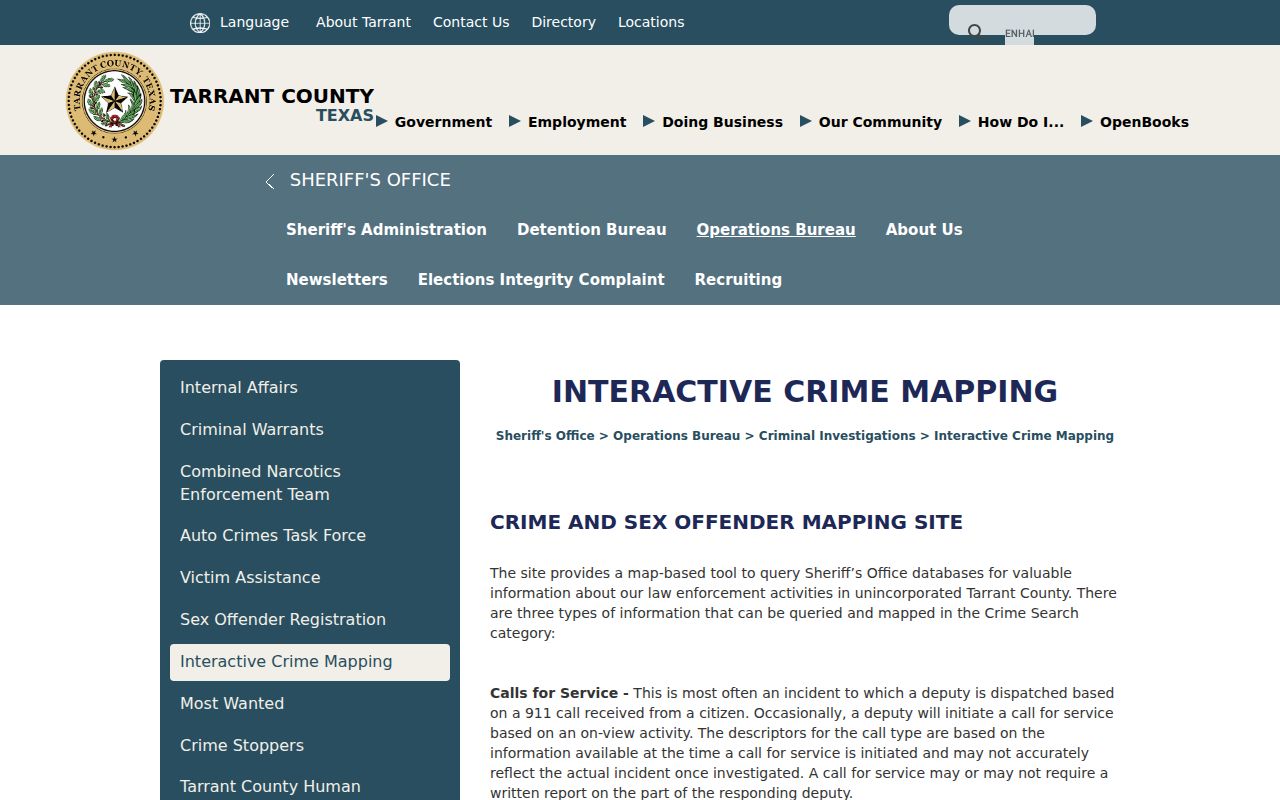
Use the GIS for added local context, then verify the listing in the statewide DPS profile. A pin that conflicts with the written address should be reported to the verifying agency, not resolved through guesswork.
Inside a Registry Profile
A DPS public profile combines identity, address, offense, and registration fields that Chapter 62 permits for public display. It may also show work, school, vehicle, or secondary-location data when the statute makes those fields public. Read the last verification and status fields closely. A registration entry records a legal duty connected to an earlier qualifying event; it is not proof of a new crime.
| Name and aliases | Published names and aliases used to distinguish the listed person. |
|---|---|
| Photo and description | Current published photograph plus height, weight, hair, eyes, and marks where available. |
| Registered address | Text address, address status, and mapped location as publicly permitted. |
| Offense information | Offense description or statute, conviction or adjudication date, and permitted victim category data. |
| Verifying agency | The local authority responsible for registration checks and corrections. |
| Registration status | Compliance or other displayed status, verification information, and duration or lifetime indication. |
Physical and demographic details help avoid a same-name mistake. They should never be used to shame, threaten, or target a listed person or household.
Cross-State Tarrant County Registry Searches
The National Sex Offender Public Website, operated by the U.S. Department of Justice, searches participating public registries across jurisdictions. It is useful when an address trail crosses state lines or when a person may have moved beyond Texas. NSOPW does not replace the state profile or the local verifying agency. Its results depend on the data each jurisdiction makes public and sends through its registry system.
The official NSOPW search provides the national layer.
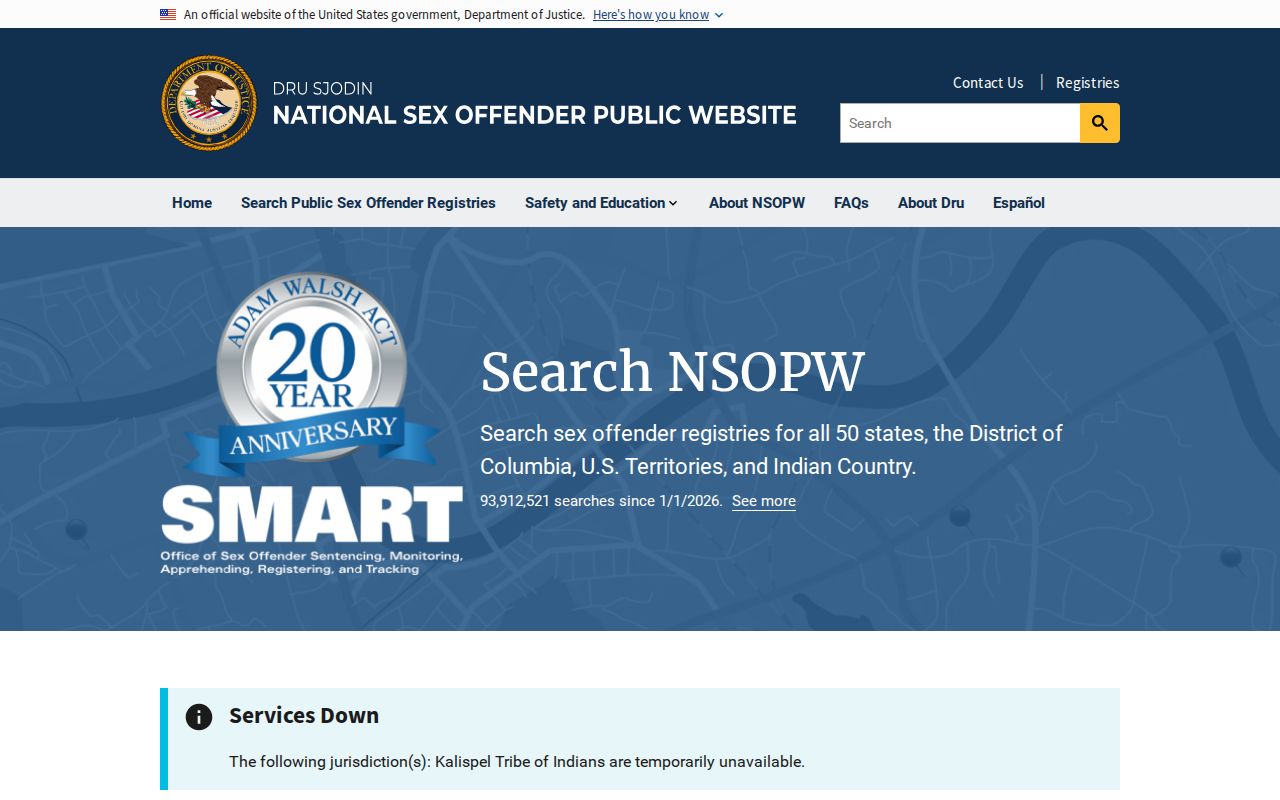
After a national match, open the responsible state record and confirm its status with the named verifying agency. Absence from a search is not a guarantee of safety because only legally registrable, currently public records appear.
Texas Registration Levels and Requirements
Texas does not use a simple consumer-facing Level 1, Level 2, and Level 3 label on every registry profile. Registration length and verification duties arise from the reportable offense, repeat status, and other definitions in Chapter 62. Federal SORNA tier terms should not be substituted for Texas classifications. The controlling statute and local authority must be checked for one person's exact duty.
| Texas category | General duration | Verification caution |
|---|---|---|
| Offenses assigned a ten-year duty | Ten years after the controlling release, discharge, or qualifying dismissal event | Do not count from conviction date alone |
| Serious or repeat events assigned lifetime duty | Lifetime | The exact statutory offense and repeat provision control |
| Civil commitment or added-frequency categories | Lifetime with added rules | Confirm the current article and local schedule |
| Juvenile or adjudication situations | Special statutory or court rules | Public visibility and exemption can differ |
The duration table gives general categories, not a calculator. Release from control, discharge from community supervision, and other statutory events can change the start point.
Tarrant County Registry and Parole Records
Registration, parole, and probation are separate legal systems. The Texas Board of Pardons and Paroles makes parole decisions, and the TDCJ Parole Division supervises releasees. Tarrant County is served by Fort Worth I, II, and III district parole offices in Region II. A person may have a registration duty without current parole, or may be on supervision without a public registry listing.
The TDCJ parole office index identifies the offices serving Tarrant County.
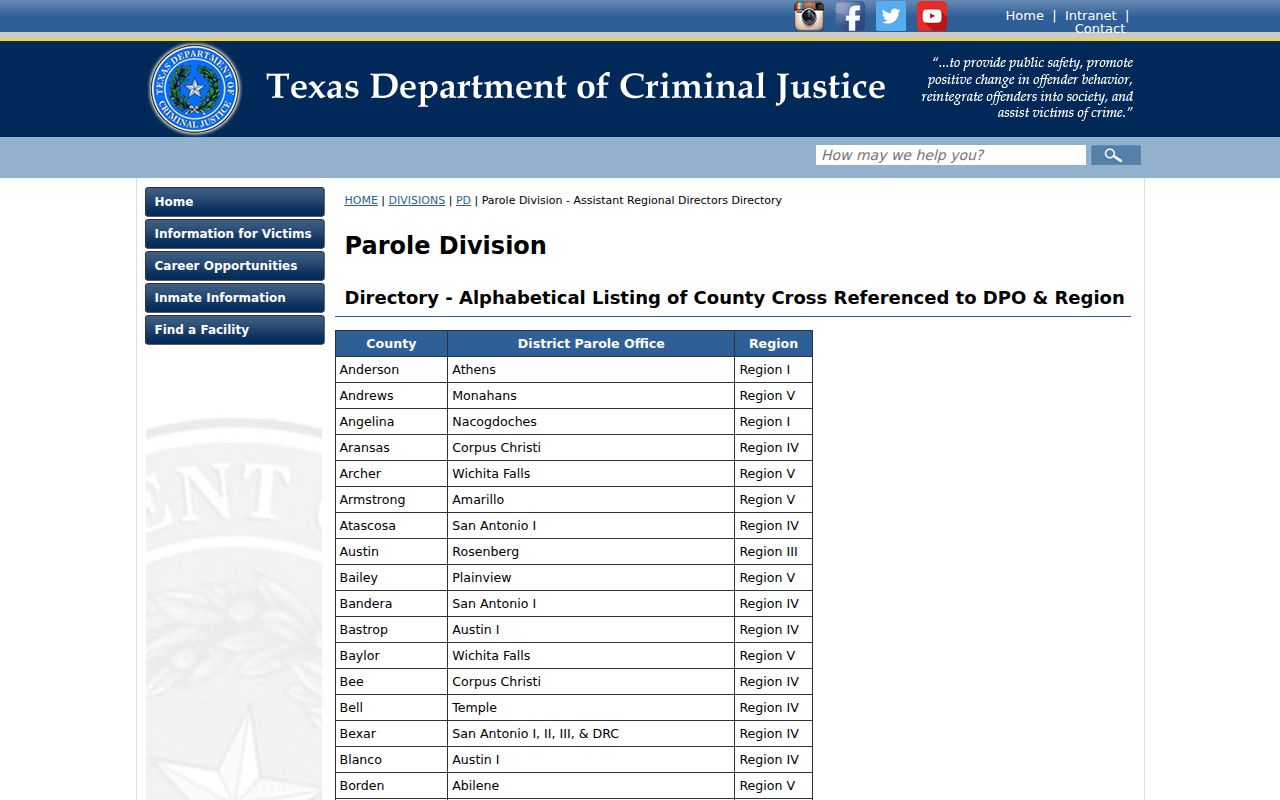
Use the registry for Chapter 62 public information. Court judgments and TDCJ channels address sentence and supervision questions, while detailed supervision notes remain subject to access limits.
Community supervision, commonly called probation, is administered locally by Tarrant County CSCD under court oversight. Parole is part of a state sentence and is supervised by TDCJ. Neither system is a public substitute for the DPS registry. If a profile raises a sentence question, use the judgment and TDCJ information for that narrow issue, then return to the verifying authority for registration status.
Note: Registry status should not be read as proof that a person violated parole, probation, or a new criminal law.
Correcting Tarrant County Registry Details
If a map pin, address, or status looks wrong, first compare the written DPS profile with the mapped point and last verification data. Then contact the verifying agency shown on the profile. For a location inside TCSO's jurisdiction, the Registration and Compliance Unit is the local contact. In Fort Worth, Arlington, and other city jurisdictions, report the issue to that city's registration authority.
Expunction rules should not be treated as a direct registry-removal shortcut. The Texas Chapter 55A expunction text governs qualifying arrest records and defined outcomes.
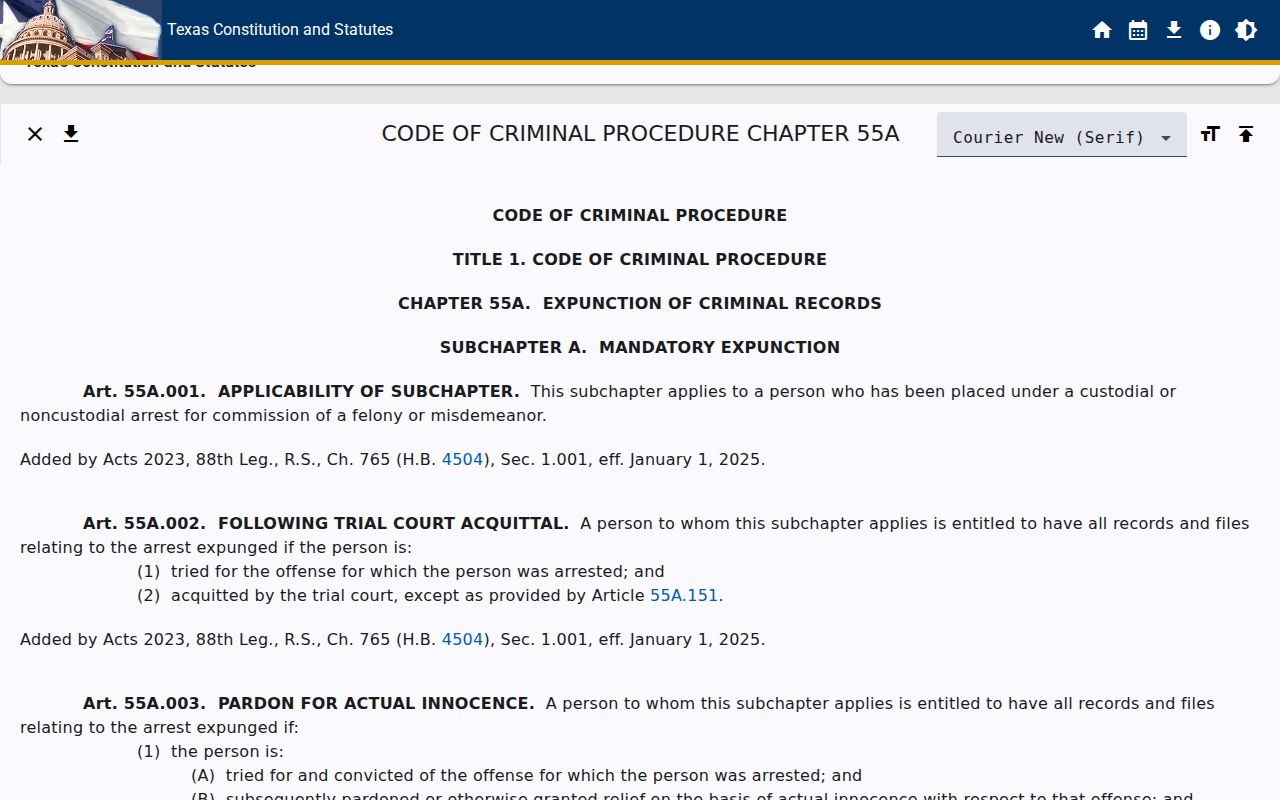
Registry duration and removal questions instead turn on Chapter 62, the qualifying case, and any applicable court or agency process. Do not infer eligibility from a short public offense label.
Likewise, a mapped address that looks stale is a data-quality question, not proof of noncompliance. Record the profile's verifying agency and the specific conflict, such as a map point that differs from the text. A concise report helps the authority check its source record without encouraging public confrontation.
Community Notification and Lawful Use
Registry information supports personal, family, and community safety planning. A resident can compare an address search with the name search, check the verifying agency, and contact law enforcement about suspected noncompliance. Emergencies go to 911. The public record should not be used as a substitute for current facts, and an old qualifying conviction does not itself establish a new offense.
Use registry information lawfully: Misusing registry information to injure, harass, threaten, or commit an offense against a registrant or household may itself be a crime. Texas Code of Criminal Procedure Chapter 62 governs the public registry and its lawful public-safety purpose.
Report a possible failure to register to the verifying agency or the police department with jurisdiction. Provide a precise, factual concern instead of confronting anyone. A suspected data error should go through the same official channel.