
Checking Criminal History in Tarrant County
No single database contains a complete Tarrant County criminal history. Begin with the record that answers the immediate question, then confirm it through the office that created the next part of the file. The official Tarrant inmate search addresses current county custody. District Clerk records cover felony filings, while the County Clerk Criminal Division covers Class A and B misdemeanor cases. Fine-only city matters stay with the relevant municipal court. Texas DPS adds reportable statewide convictions and deferred adjudications.
Gather a full legal name, date of birth, spelling variants, and any known booking or cause number. A shared name is not enough to tie a public result to one person. Use the most specific identifier available and read the status field before drawing a conclusion.
- Search current custody and the rolling Daily Booked-In Reports when the event is recent.
- Check the District Clerk for a felony or the County Clerk for a Class A or B misdemeanor.
- Contact the municipal court for a fine-only city charge or city warrant.
- Use the DPS name search for public, reportable Texas history beyond Tarrant County.
- For self-review, use fingerprints and obtain certified local dispositions before disputing an error.
- Request a specific police or sheriff report by incident number, date, and location.
That sequence separates present custody, the filed charge, the court outcome, and repository data. Each is useful, but none proves what all the others contain.
Four Tarrant County Criminal Records
A Tarrant County arrest can produce four distinct records. The arresting officer writes an incident or arrest report. The jail creates booking data and fingerprints. A magistrate records warnings and bond action. If prosecutors file a case, a clerk opens a docket. DPS may then receive the fingerprint event and, later, the court disposition. Updates do not always reach each system at the same time.
The official Tarrant County directory shows how many offices share this work.

The county directory is a routing tool, not a unified person search. Pick the department that created the document you need.
Note: A booking charge may change when the Criminal District Attorney decides what charge, if any, to file.
Texas Official Background Checks
The Texas Department of Public Safety Crime Records Division maintains the state criminal-history repository. Its public Criminal History Conviction Name Search is account-based and returns only information Texas law permits DPS to release, generally qualifying convictions and deferred adjudications reported to the agency. It is a name match, not a full identity-confirmed rap sheet. Common names, aliases, an incorrect birth date, and reporting lag can cause a false match or miss.
The DPS Crime Records Service also directs people reviewing their own record to the fingerprint-based personal-review process.
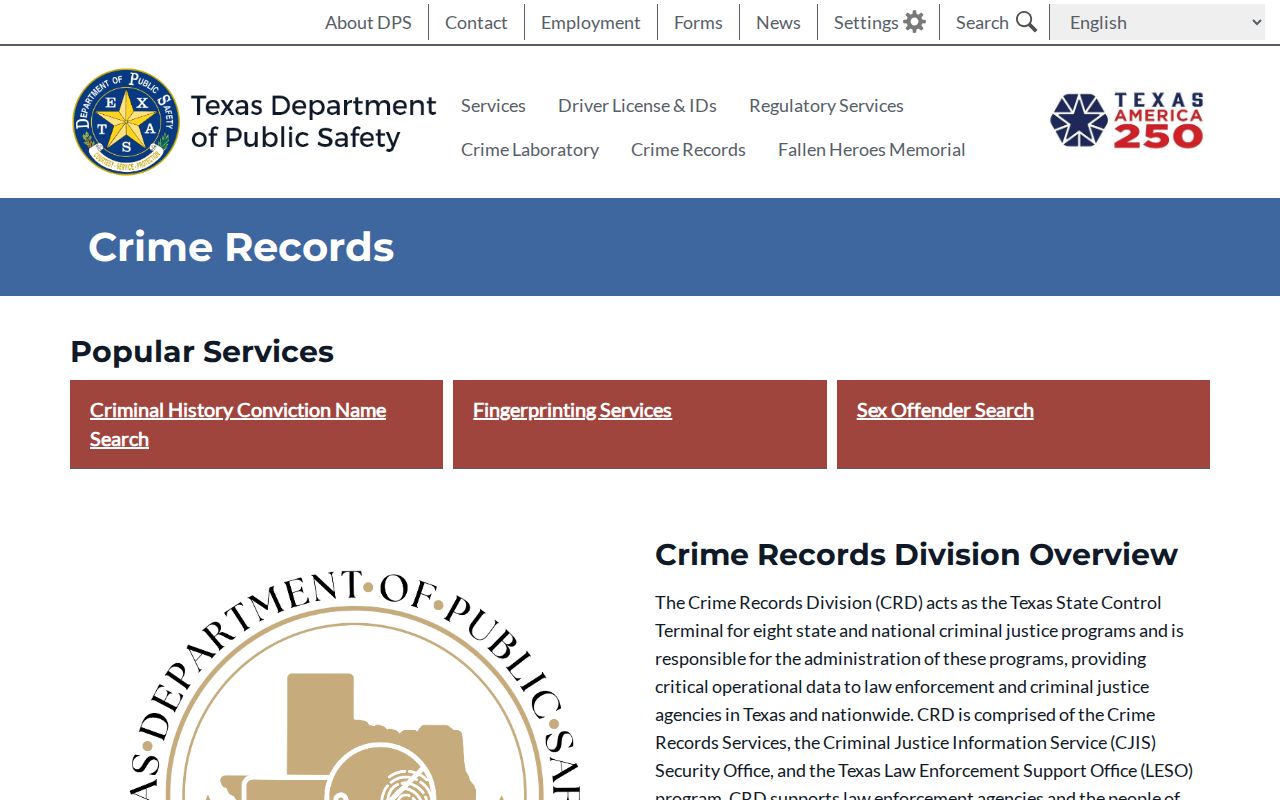
The DPS service distinguishes a public name result from an identity-matched personal review. A Tarrant County court file remains the better source for the pleadings, hearings, judgment, and costs in one local case.
The FBI Identity History Summary is another self-review channel. It covers information submitted to the FBI and requires fingerprints through an approved submission method. It does not replace a current Tarrant County clerk check or supply every local narrative. When a record has real consequences for its subject, compare the federal summary, the Texas fingerprint review, and certified local dispositions instead of treating a paid public name result as final.
Tarrant County Fingerprint Record Review
FAST, the Fingerprint Applicant Services of Texas program, uses IdentoGO by IDEMIA for capture appointments. The requesting Texas agency supplies a service code, and that code controls the purpose, recipient, and price. Do not guess at a code or reuse one from another request. Enrollment typically asks for legal name, aliases, birth details, contact data, identification, and an appointment site.
The official FAST enrollment site starts the appointment process.
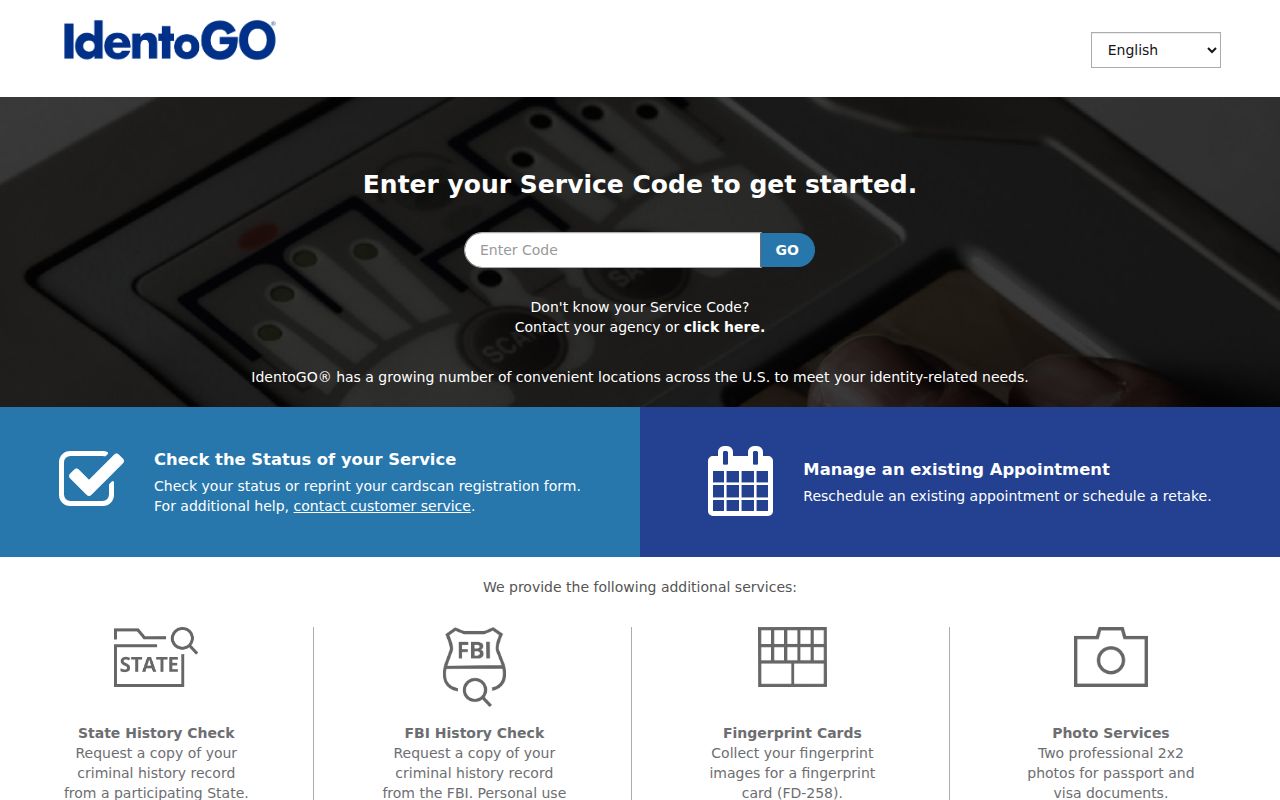
Bring the required identification, retain the transaction receipt, and follow DPS instructions for the result. If the record is wrong, obtain the certified Tarrant County disposition and use the DPS correction channel.
| Product | Identity basis | Coverage | Cost rule |
|---|---|---|---|
| DPS public search | Name and birth data | Public Texas convictions and deferred adjudications | Live portal credit price controls |
| DPS personal review | Fingerprints | Identity-matched Texas history | Service-code price controls |
| County Clerk search | Name in local index | Tarrant Class A and B cases since 1976 | $5 |
Criminal Record Types
Tarrant County criminal records differ by purpose and custodian. A police narrative records allegations and officer actions. A jail record documents intake and custody. A charging instrument states what the prosecutor filed. The court docket then tracks motions, settings, plea, judgment, and sentence. DPS arranges reported events into a repository history, while the public registry displays information governed by a separate statute.
- Incident and arrest report: held by the sheriff, city police, constable, trooper, or other authoring agency.
- Booking record: held by the detention agency and tied to a booking or CID number.
- Court case file: held by the District Clerk, County Clerk, municipal court, or justice court based on jurisdiction.
- DPS history: reported arrest cycles and outcomes available only to the extent state law permits.
- Custody or supervision record: held by Tarrant County, TDCJ, CSCD, or the TDCJ Parole Division.
- Registry listing: maintained statewide by DPS and verified by the responsible local authority.
The full court-case path is covered in the Tarrant County criminal court case resource. It helps explain why an initial arrest label may not match the final filed charge.
Tarrant County Custody Record Layers
Use the Tarrant County inmate search for current pretrial or local custody. The Daily Booked-In Reports preserve a date-oriented view for fourteen days, so they can still show a recent intake after release. Call the central jail information line at 817-884-3000 if the web result is unclear. An empty search may mean release, transfer, a spelling issue, or custody in another system.
The Texas VINE service provides custody-status notifications, while TDCJ Offender Information covers people in state prison.
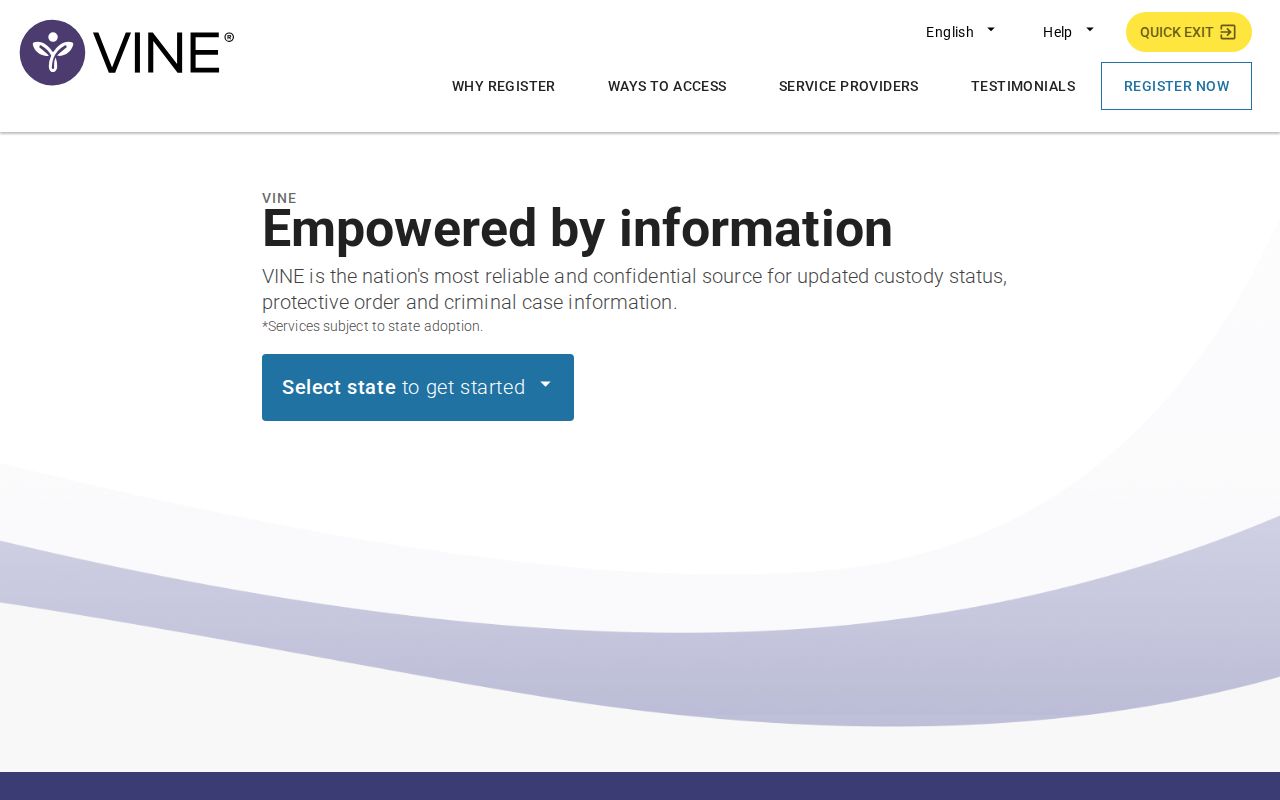
Texas VINE supplies custody-status notifications, while TDCJ provides state-sentence and location data. Federal custody requires the Bureau of Prisons locator. These channels should not be blended into one jail result.
Note: Custody data answers where a person is held, not whether a charge ended in conviction.
Inside a Tarrant County Criminal Record
A Texas repository history usually begins with identity details and then groups events into arrest cycles. A Tarrant County court file instead centers on a cause number, court, pleadings, hearings, attorneys, disposition, and costs. The booking entry emphasizes intake and current custody. Read the field label and the custodian before deciding what a value means.
| Name and identifiers | Legal name, aliases, date of birth, SID, FBI number, booking number, or cause number where applicable. |
|---|---|
| Arrest and booking | Arrest date, agency, intake time, initial charge, bond, facility, and release or transfer data. |
| Filed case | Complaint, information or indictment, court assignment, docket events, attorney, and settings. |
| Disposition | Dismissal, deferred adjudication, acquittal, conviction, or another recorded outcome. |
| Sentence | Custody, community supervision, fine, restitution, or other judgment terms. |
| Repository status | Reported arrest cycle and disposition, subject to dissemination limits and reporting delay. |
A disposition is the result recorded for a charge. A docket is the chronological list of filings and court events. Deferred adjudication means supervision without an immediate finding of guilt, but the event does not vanish automatically.
Tarrant County Criminal Records Counter
The 1895 Tarrant County Courthouse is a prominent public-record landmark, but it is not the main criminal clerk counter. Class A and B misdemeanor records are kept by the County Clerk Criminal Division on the second floor of the Tim Curry Criminal Justice Center, 401 West Belknap Street. The office lists 817-884-1066 and weekday public hours from 7:30 a.m. to 5 p.m. Its local name search costs $5, and the criminal index reaches back to 1976.
Felony records belong to the District Clerk. The criminal operation lists 817-884-1342 and 817-884-1343, while the general District Clerk address is 100 North Calhoun Street. Public terminals can help a visitor identify a specific cause or arrest reference before requesting a related report.
County Clerk Criminal Division
401 W. Belknap St., 2nd Floor
Fort Worth, TX 76196
817-884-1066
7:30 a.m. to 5 p.m.
District Clerk Criminal Office
100 N. Calhoun St.
Fort Worth, TX 76196
817-884-1342
8 a.m. to 5 p.m.
Sheriff Records Division
200 Taylor St., 6th Floor
Fort Worth, TX 76196
817-884-2942
Last customer at 4:50 p.m.
Public Access Laws in Texas
The Texas Public Information Act presumes access to government information, but it also permits withholding of specified law-enforcement material. Basic arrest information may remain public while an active investigative narrative is protected. Tarrant County also states that it generally cannot answer a public-information request by compiling every arrest or charge linked to one named person. Search clerk indexes first, identify a specific case or incident, and then request the named document.
Key statutes:
Government Code Chapter 552 sets public access rules and law-enforcement exceptions.
Government Code Chapter 411 governs criminal-history dissemination and nondisclosure.
Code of Criminal Procedure Chapter 55A sets expunction eligibility and procedure.
Code of Criminal Procedure Chapter 62 governs sex-offender registration duties and public data.
Juvenile information, victim identifiers, protected personal data, nondisclosed history, and expunged records can remain restricted. Judicial files also have sealing and confidentiality rules that differ from executive-agency records.
Tarrant County JustFOIA Record Requests
JustFOIA is the county's online channel for a targeted public-information request. Alternatives matter. A requester may email openrecords@tarrantcountytx.gov, fax 817-884-1675, or mail or deliver a request to the Criminal District Attorney Civil Division, Tim Curry Criminal Justice Center, 401 West Belknap Street, ninth floor, Fort Worth, Texas 76196-0201. Name the agency, incident or cause number, date range, location, exact document, and preferred format.
The Tarrant County Sheriff portal routes readers to detention, inmate, and records services that complement the county request channels.

Sheriff pages route local jail and booking questions, while city police narratives normally stay with the city that wrote them. Pending investigative records may require a renewed request after a case closes.
| Channel | Best use | Requirement or fee |
|---|---|---|
| JustFOIA, email, fax, or mail | Specific county-held report | No filing fee; allowed production costs may apply |
| Sheriff Records | Jail record or authorized incarceration letter | Identity and authority limits apply |
| County Clerk | Class A or B case name search | $5 |
| City police custodian | Report written by that city agency | Use the city's current request rules |
Tarrant Criminal Cases Skip re:SearchTX
re:SearchTX is a statewide portal for e-filed civil, family, and probate records. Criminal case records are excluded. A searcher who finds nothing there has not proved that no Tarrant County criminal case exists. Felony cases must go through the District Clerk, and Class A or B misdemeanor cases through the County Clerk. Municipal and justice-court matters remain in their own narrower systems.
The re:SearchTX portal makes the statewide boundary visible.
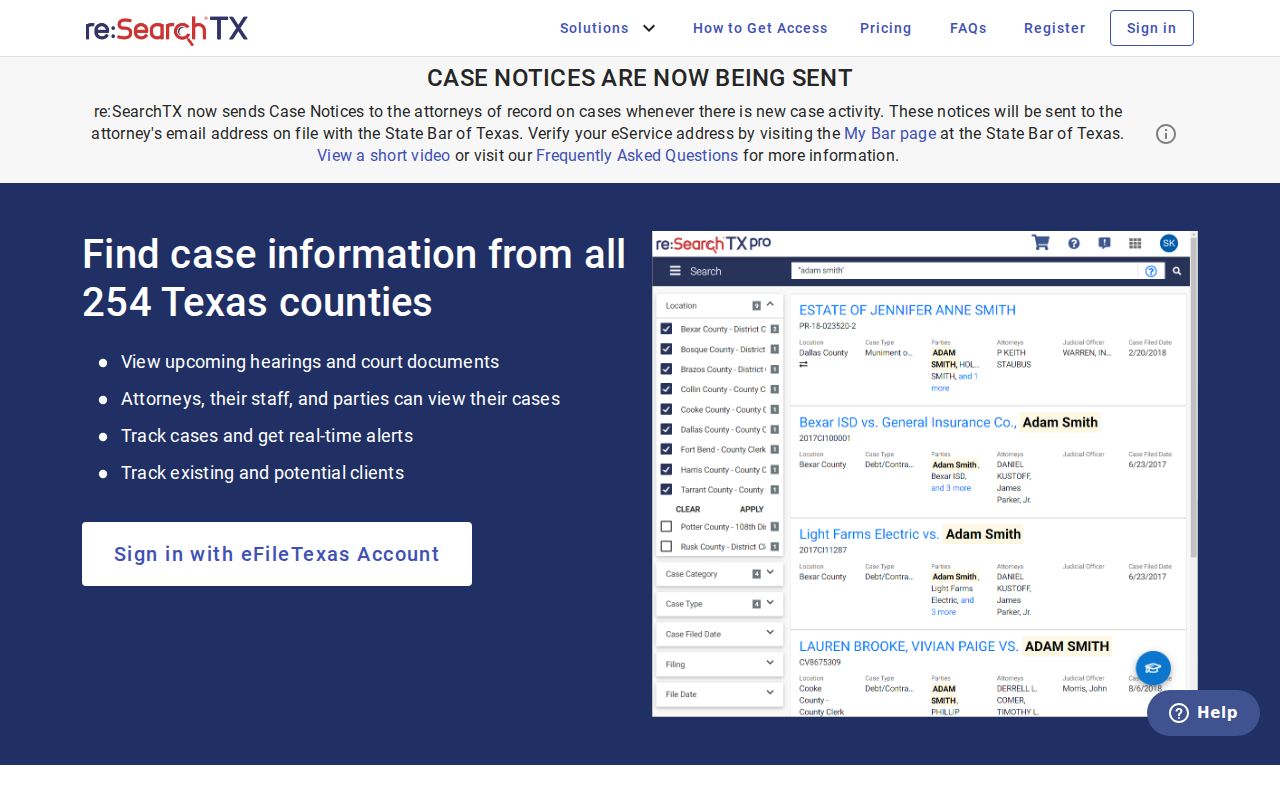
This is a key local search trap. Statewide reach does not mean statewide criminal coverage, so use the Tarrant clerk that matches the charge level.
Note: Remote District Clerk Web Based Access requires a subscription and is advertised for 23 hours each day.
Sealed, Expunged, and Restricted Records
Texas uses two distinct forms of relief. Expunction under Chapter 55A is the stronger remedy and applies only to defined arrest circumstances and outcomes. An order of nondisclosure under Government Code Chapter 411 can limit public dissemination of eligible records but preserves access for agencies named by law. Neither remedy follows from a dismissal automatically.
A Tarrant County filing needs accurate arrest dates, agencies, charges, cause numbers, courts, and final dispositions. A petition must identify each record holder so notice and any order can reach the sheriff or police agency, jail, prosecutor, clerks, DPS, and other repositories. Filing and service charges depend on the case; obtain the current amount from the District Clerk.
- Expunction
- A court process that generally directs qualifying arrest records to be destroyed or returned, subject to Chapter 55A.
- Nondisclosure
- An order that restricts public access while leaving specified government access in place.
- No-bill
- A grand jury decision not to return an indictment, which is not the same as automatic deletion.
- Dismissal
- A charge ends without conviction, but separate facts and waiting rules still control relief.
After an order, keep certified copies and later review the county index and a fingerprint-based DPS record. If stale information remains, use the correction process of the agency that supplied it.
Tarrant County Warrant Record Limits
The Tarrant County Sheriff's Office does not release criminal-warrant information to the general public. Its Criminal Warrants Division at 200 Taylor Street serves licensed bondsmen, attorneys, and law-enforcement agencies, with a public contact number of 817-884-1289. A person concerned about a warrant should verify through the issuing court or counsel and obtain instructions tied to the cause, warrant type, and bond.
Traffic and municipal warrants belong with the issuing agency or court. For example, Grand Prairie offers a city citation and warrant search, while a TCSO deputy citation routes to the Justice of the Peace printed on it. Executed probable-cause and search warrants can have different access rules from active or sealed warrants.
A bench warrant or capias can follow a failure to appear or comply. A capias pro fine concerns post-judgment collection. Those labels carry different procedural meaning and should be checked against the court file.
When a warrant concern stems from a recent arrest, the inmate search and jail line can confirm current custody, listed charges, and bonds. When it stems from a city citation, contact the municipal court shown on the ticket. Search warrants may remain sealed during an investigation, and an out-of-county or federal warrant must be handled through its issuing jurisdiction. These limits make the issuing court more reliable than a broad request to the sheriff.
Tarrant County Criminal Records by City
U.S. Census Bureau 2024 estimates identify Fort Worth, Arlington, and Grand Prairie as the three largest incorporated cities wholly or partly in Tarrant County. Each police department keeps its own reports, and each municipal court keeps fine-only city cases. County booking and higher-level prosecution may still flow to Tarrant County, but the city that wrote the narrative remains the first report source. Grand Prairie spans three counties, so the incident location matters when choosing a clerk.
Fort Worth Criminal Records
1,008,106 · City police, municipal court, and county-seat records use separate custodians.
Arlington Criminal Records
403,672 · APD reports and Municipal Court copies start with city channels.
Grand Prairie Criminal Records
207,331 · Confirm the incident county before selecting a higher court clerk.
City pages stay focused on police reports and municipal files. Countywide court, jail, and DPS layers remain separate checks.
Fort Worth police narratives belong to the City of Fort Worth even though the county justice campus is downtown. Arlington offense reports remain with Arlington Police, while its fine-only cases stay in Arlington Municipal Court. Grand Prairie police records can include arrests, case files, and video, but a higher-level prosecution may belong to Tarrant, Dallas, or Ellis County based on the event location. Confirm the authoring agency and court before paying for a copy.